
Gianluca Gemme will be the director of EGO from January 2027
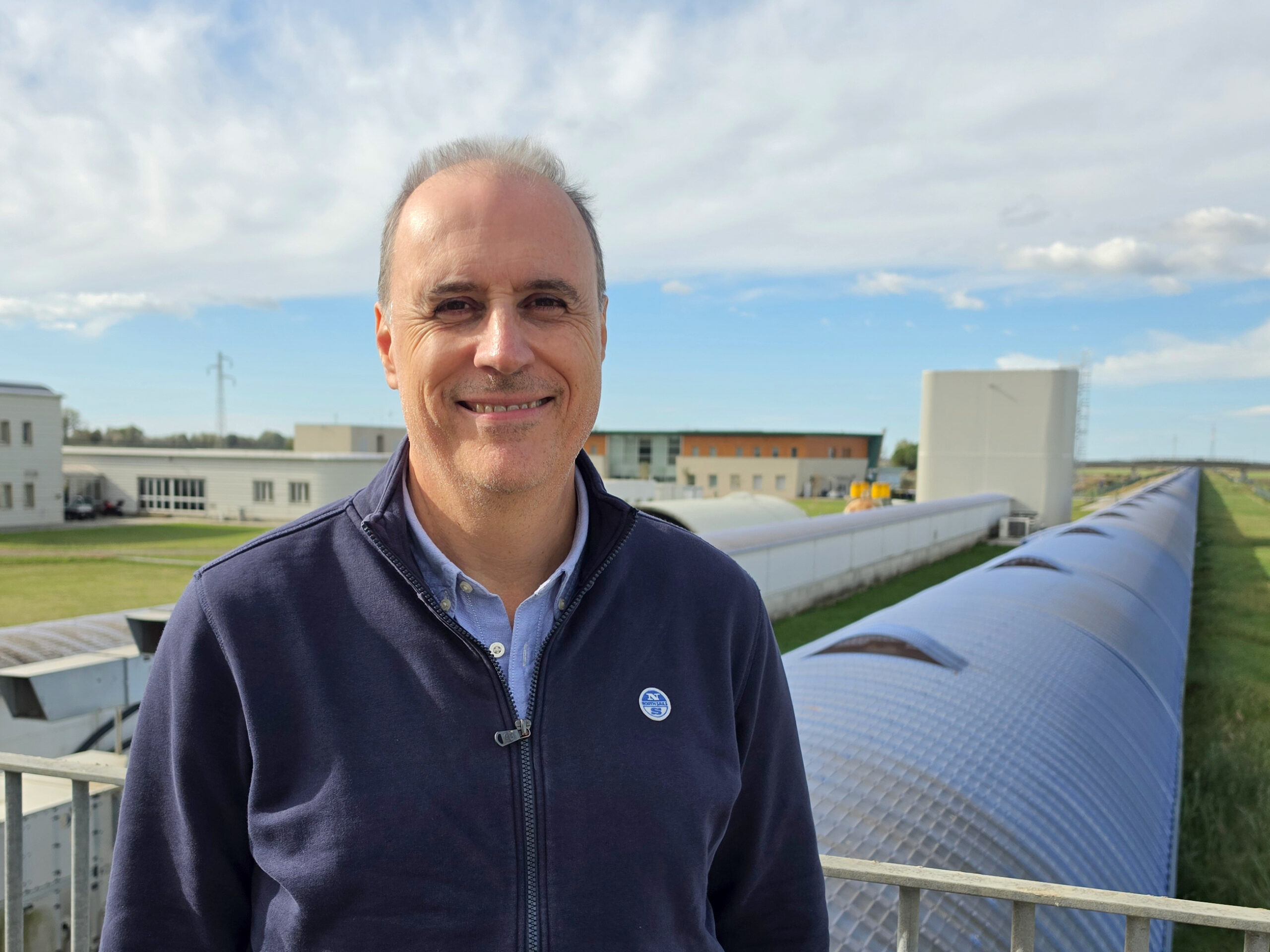
Gianluca Gemme, a senior research scientist at the INFN branch in Genoa, is to become the next director of the European Gravitational Observatory (EGO) with effect from January 1st 2027. His appointment was approved on October 22nd by the EGO Council, the governing body of the international consortium, comprising representatives from the five scientific institutions that fund it: the Centre National de la Recherche Scientifique (CNRS) in France, the National Institute for Nuclear Physics (INFN) in Italy, the National Institute for Subatomic Physics (Nikhef) in the Netherlands, the Flanders Research Foundation (FWO) and the Belgian Fund for Scientific Research (F.R.S.-FNRS) in Belgium. The Director of EGO is appointed by the Council from a shortlist of candidates selected through an international call for applications. Gemme will succeed Massimo Carpinelli, a professor at the University of Milan-Bicocca and Director of EGO since 2023, in this role. His term of office will run until 2029 and may be renewed for a further two years.
“Congratulations to Gianluca Gemme, to whom I shall hand over the reins of EGO next year,” said Massimo Carpinelli, the current director. “EGO and Virgo are at a crucial stage in their development, and I am certain that my successor will be able to rise to the challenges we face. I wish him every success in his new role!”
“I would like to thank the EGO Council for the trust they have placed in me,” said the designated director Gianluca Gemme. “I accept this role with a great sense of responsibility, at a decisive stage for Virgo’s future and with a view to the preparation of the Einstein Telescope. The priority will be to complete the detector upgrade plan, so that Virgo remains a key player in the network of international observatories and continues to produce scientific results of the utmost significance. I am committed to developing EGO as the leading European laboratory for gravitational waves, in collaboration with the scientific community, funding agencies and international partners.”
Gianluca Gemme is a Director of Research at the Genova division of INFN. He graduated in physics from the University of Genova in 1989 and joined INFN in 1993. He works on gravitational-wave detection and has held leadership roles in Virgo for most of the past two decades. He was INFN national coordinator for Virgo from 2014 to 2018 and Spokesperson of the Virgo Collaboration from 2023 to 2026. As Spokesperson he helped design the VirgoLab governance framework and represented Virgo in the founding of the International Gravitational-Wave Observatory Network (IGWN). There he chaired the Inaugural IGWN Board and led the drafting of the IGWN Memorandum of Agreement, signed in September 2026. From 2020 to 2023 he chaired the Einstein Telescope Instrumental Science Board. He teaches a master’s course on gravitational waves at the University of Genova. As a member of the LIGO and Virgo collaborations, he shared the 2016 Special Breakthrough Prize in Fundamental Physics and the 2016 Gruber Cosmology Prize.
EGO, the European Gravitational Observatory, situated in Cascina, in the Pisa countryside, is home to the Virgo experiment, the only gravitational-wave detector in Europe and one of only four in the world. Gravitational waves are very faint cosmic signals that allow us to observe extraordinary phenomena in the deep Universe, such as the merger of black holes or stars. Around 1,000 scientists from 20 countries contribute to the Virgo scientific collaboration. The European Gravitational Observatory (EGO) is funded by the Centre National de la Recherche Scientifique (CNRS) in France, the National Institute for Nuclear Physics (INFN) in Italy, the National Institute for Subatomic Physics (Nikhef) in the Netherlands, the Flanders Research Foundation (FWO) and the Belgian Fund for Scientific Research (F.R.S.-FNRS). EGO is also involved in public outreach projects, events, installations and exhibitions at the intersection of art and science, artist residencies and citizen science activities.
You may be interested

A WEEKEND EXPLORING GRAVITATIONAL WAVES WITH EGO AND VIRGO

Virgo’s virtual tour returns with Pico New Horizons project
EGO and Virgo are taking part in the European Researchers Night with Bright Night and PICO

Two instrumented baffles installed in Virgo by IFAE Barcelona

The new LIGO–Virgo–KAGRA Catalog sets new records in precision gravitational astronomy