
Virgo’s virtual tour returns with Pico New Horizons project
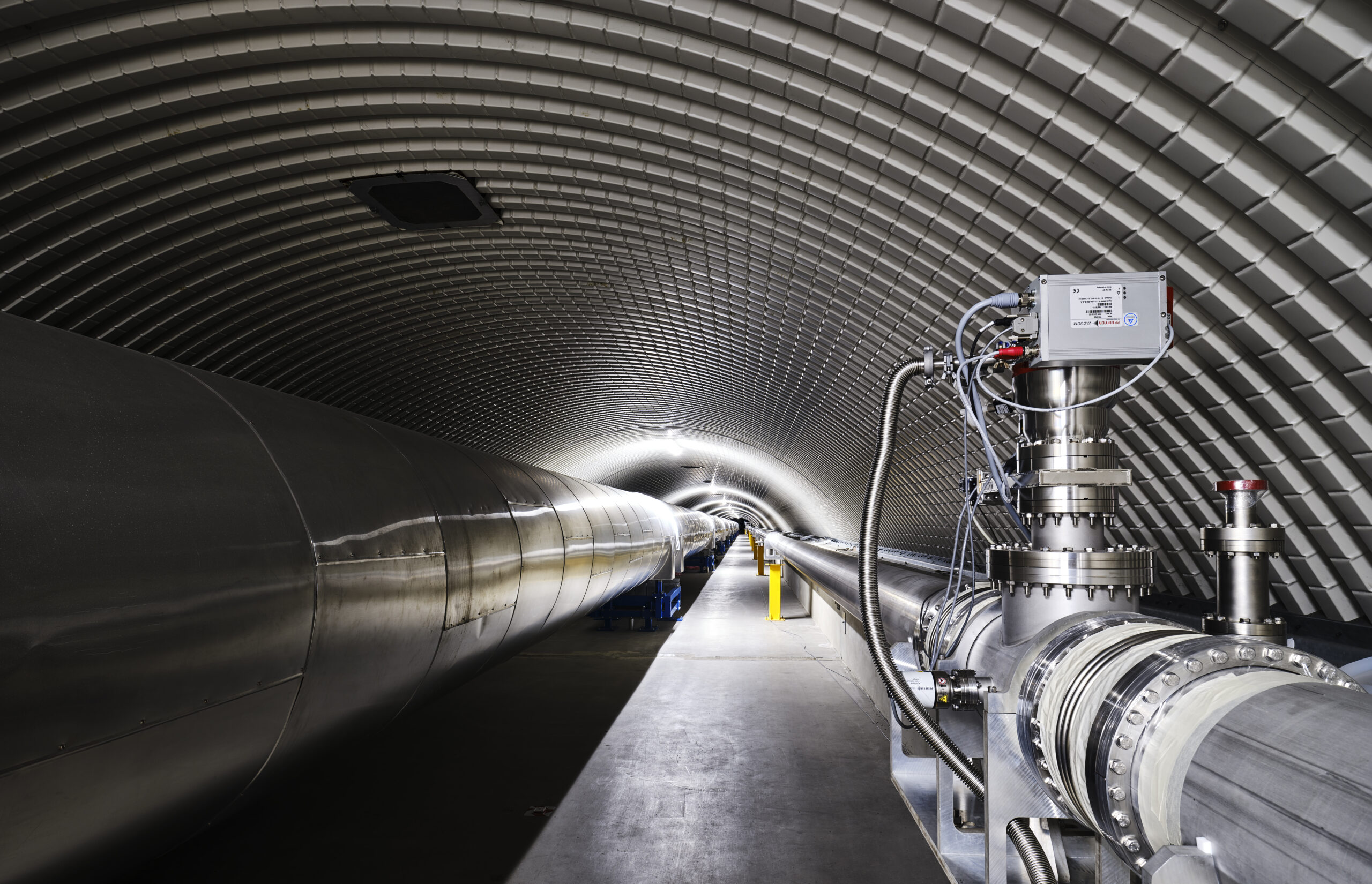
On Thursday 24 September, remote guided tours of Virgo will resume as part of the PICO New Horizons project, funded by the European Union. This initiative was previously carried out successfully as part of the earlier PICO (PhysICs fOr all) project, thanks to which as many as 3,000 students from all over the world had the opportunity to explore Virgo virtually and learn about gravitational waves.
This year, the virtual tours will take place as part of a joint event involving other project partners, and form part of the initiatives organised to mark the European Researchers’ Night.
Overcoming language and time zone barriers, students will be able to join in from all over the world and take part in four different scientific experiences:
- The Katrin experiment (8.00–9.00)
- The CMS experiment at CERN (9.00–10.00)
- The Virgo interferometer (10.30–11.30)
- Astronomical observations from the Stefani Observatory in Corinth (19.30–21.30)
The visit to Virgo, which, like the others, will be conducted in English, will follow the format of an in-person tour: after a brief introduction to the main scientific concepts relating to the interferometer and the study of gravitational waves, participants will be able to ‘explore’ the facility under the guidance of researchers from the international Virgo scientific collaboration.
The aim of the initiative is to offer students the opportunity to understand how a major scientific infrastructure such as Virgo works, and to actively involve those schools which, for logistical or financial reasons, are unable to travel to Italy for an in-person visit.
The PICO – New Horizons project, funded by the Horizon Europe programme (Grant Agreement No. 101305391), builds on the success of the previous PICO project with the aim of bringing cutting-edge physics closer to society through scientific communication and outreach activities.
Already a partner in PICO, EGO is renewing its commitment by collaborating with scientific institutions across ten European countries. PICO – New Horizons aims to build a bridge between society and innovations in physics, demonstrating how scientific research can help tackle concrete global challenges, such as climate change, extreme natural events, the green transition, sustainable construction and the development of solutions with reduced environmental impact.
In addition to EGO, the following are partners in the project: Aristotle University of Thessaloniki (Greece), Ellinogermaniki Agogi (Greece), National Observatory of Athens (Greece), NUCLIO (Portugal), IFAE – Institut de Física d’Altes Energies (Spain), Karlsruher Institut für Technologie (Germany), Balcan Physical Union (Greece), INFN – Istituto Nazionale di Fisica Nucleare (Italy).
For further information on the event, please visit the website: https://piconewhorizons.eu/online-events/
You may be interested

A WEEKEND EXPLORING GRAVITATIONAL WAVES WITH EGO AND VIRGO
EGO and Virgo are taking part in the European Researchers Night with Bright Night and PICO

Two instrumented baffles installed in Virgo by IFAE Barcelona

The new LIGO–Virgo–KAGRA Catalog sets new records in precision gravitational astronomy

Gravitational wave detectors can now ‘auto-tune’ their signals