Italy and France celebrate the era of gravitational waves at Palazzo Farnese in Rome
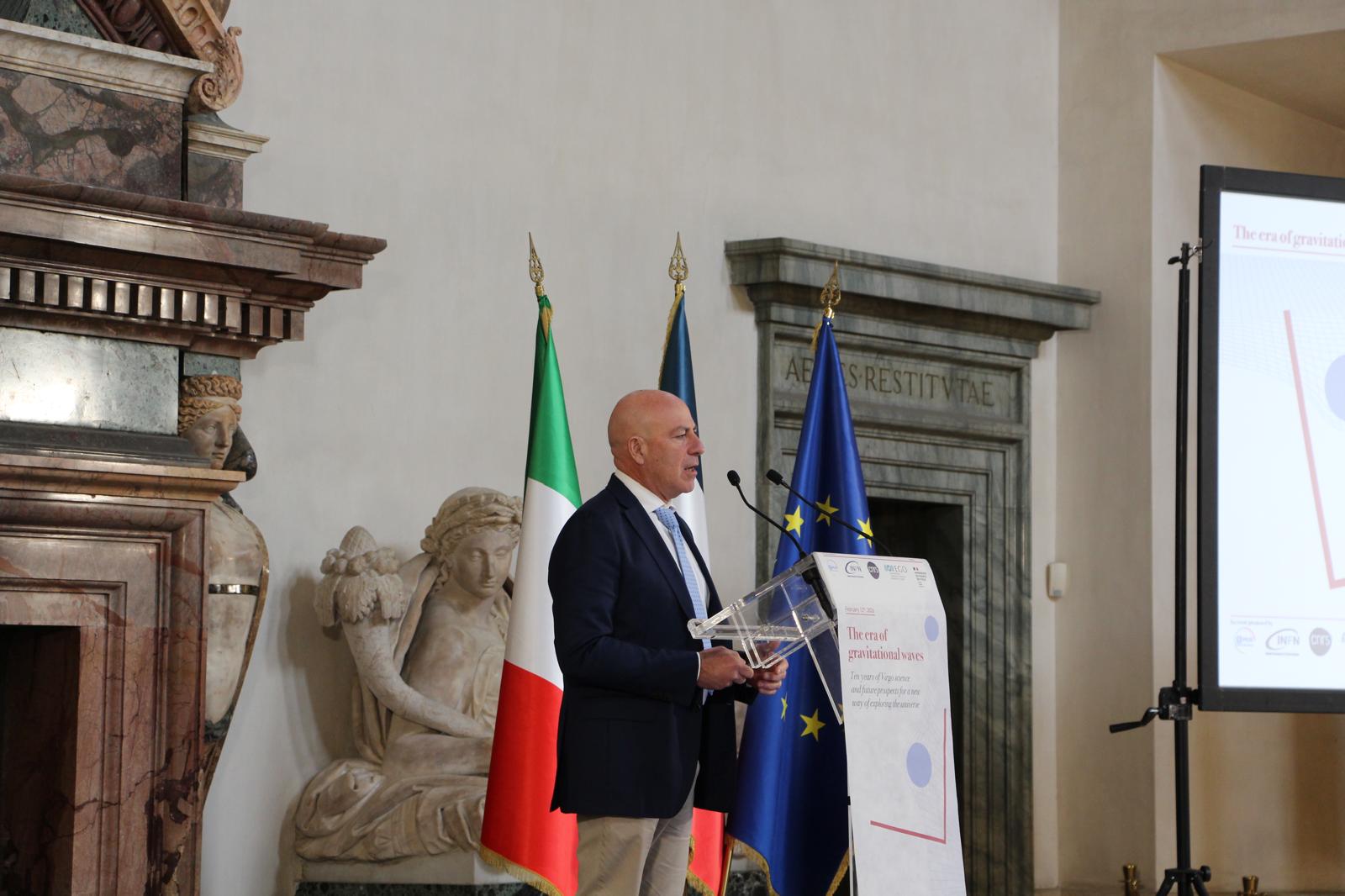
Ten years of Virgo science and the future prospects of a new way to explore the universe
“Observation of Gravitational Waves from a Binary Black Hole Merger”: this is the title of the article published ten years ago in Physical Review Letters by the LIGO and Virgo collaborations, presenting the discovery of gravitational waves to the international scientific community and the whole world. The scientists of the two collaborations thus wrote and signed a new extraordinary chapter in the book of science. This historic achievement, recognised with the Nobel Prize in Physics the following year, crowned the dream of thousands of people and hundreds of institutions around the world who had worked on it. A dream considered impossible to achieve by Albert Einstein himself, who had predicted the existence of gravitational waves in his theory of general relativity a hundred years earlier: ripples in space-time, the four-dimensional structure of the universe, which propagate through the cosmos at the speed of light after being produced by astrophysical cataclysms, and whose effects on Earth, at the time of Einstein and even beyond, were thought to be too infinitesimal to be measured. Instead, after fifty years of research and technological developments beyond the state of the art, the dream has come true, the endeavour has been carried out successfully, with initiative and perseverance.
Italy and France have been at the forefront of this endeavour, with the INFN Istituto Nazionale di Fisica Nucleare and the CNRS Centre Nationale de la Recherche Scientifique and their scientific communities in Europe founding, funding and collaborating on the Virgo project, at the EGO European Gravitational Observatory consortium, today the only European centre where direct research on gravitational waves is carried out and where young generations of scientists can train in the field.
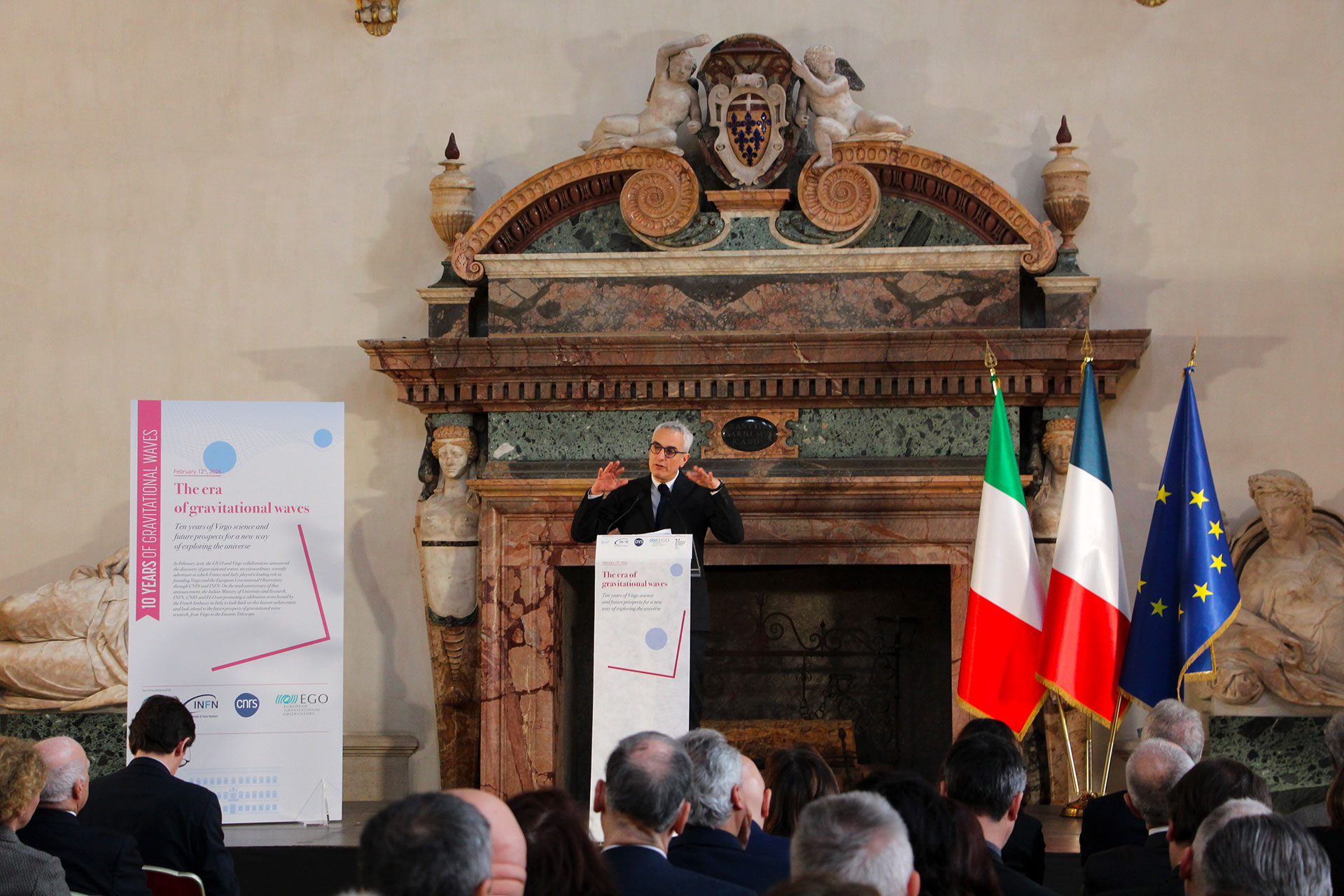
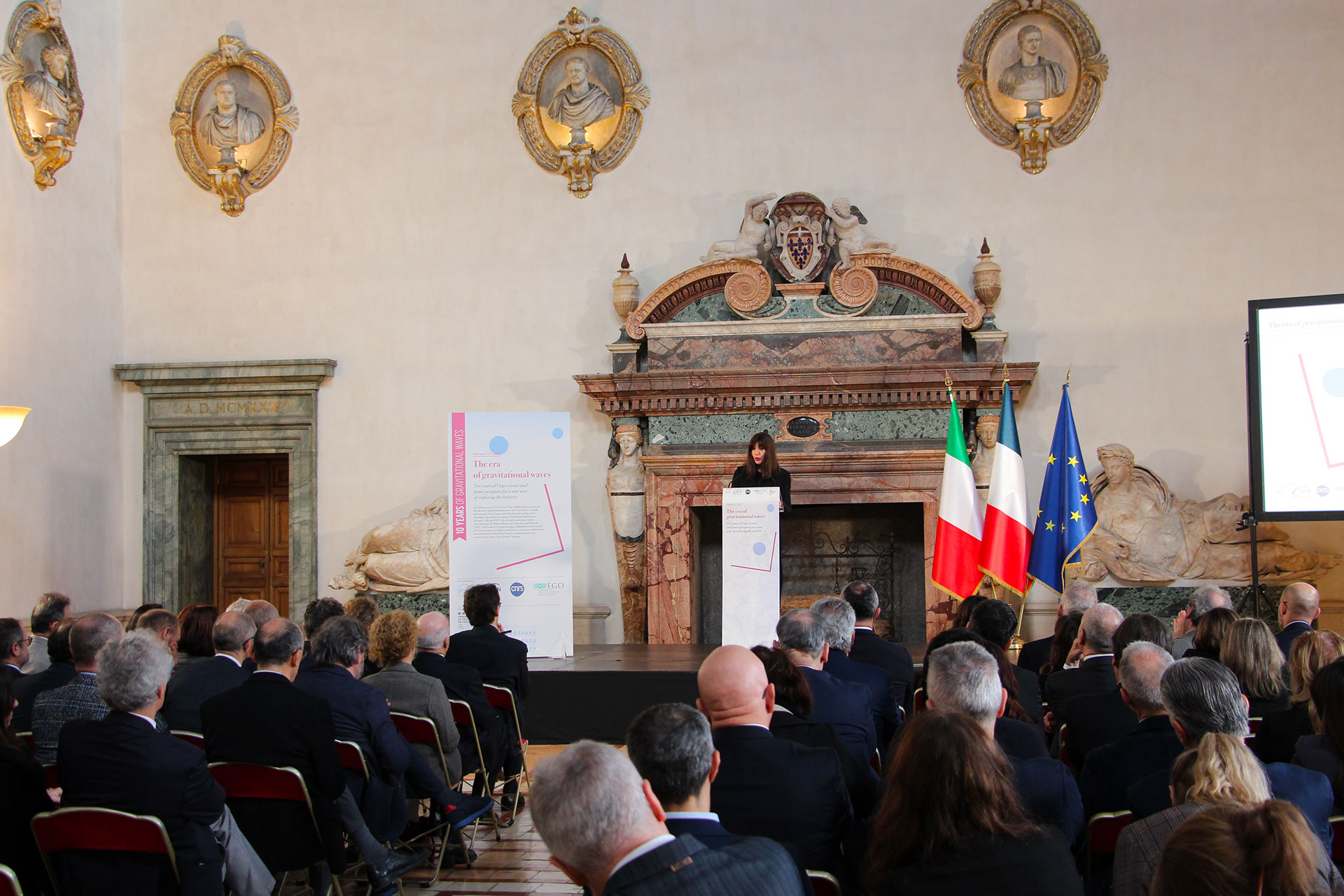
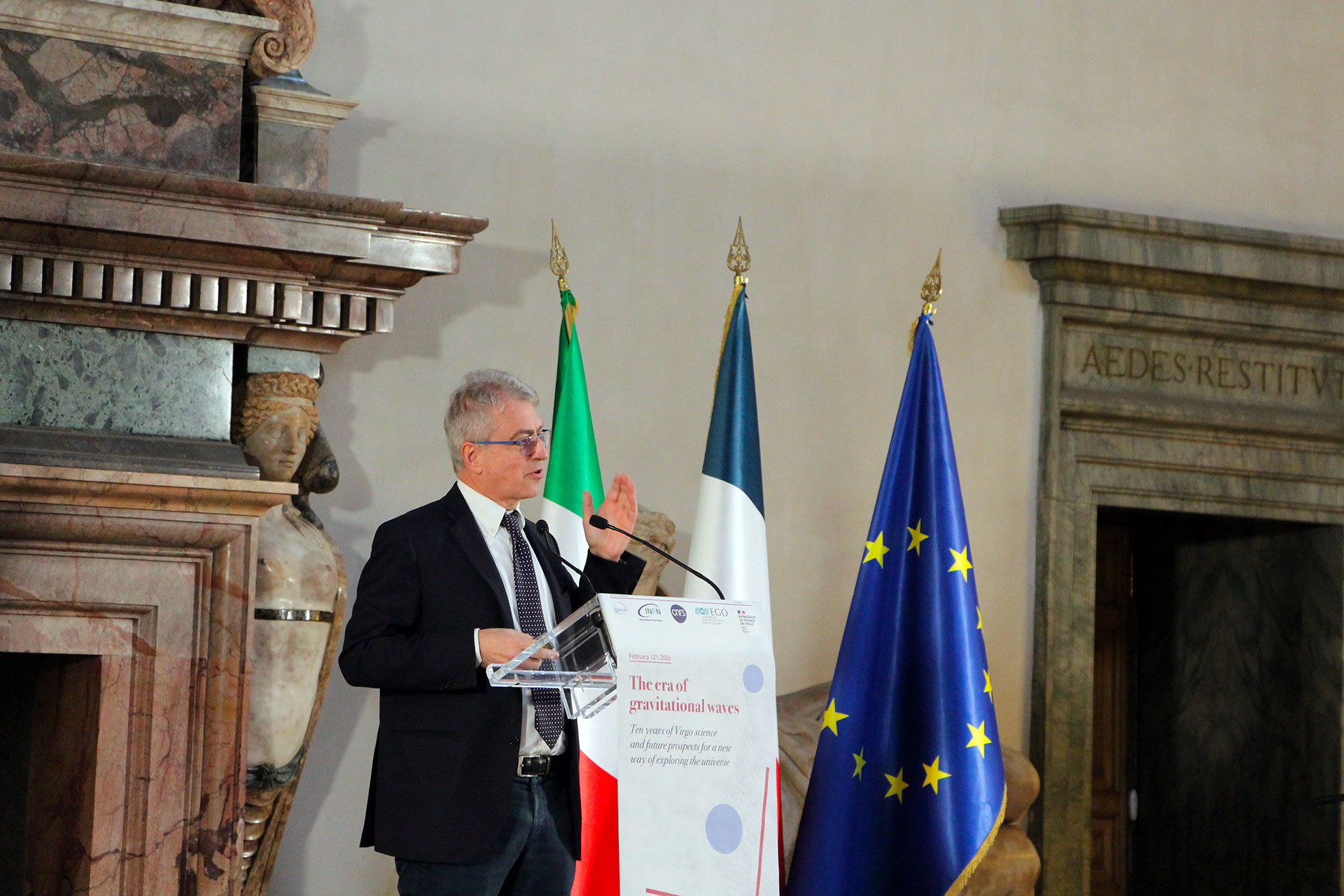
Today, 12 February 2026, the MUR Ministry of University and Research, INFN, CNRS and EGO promoted the event, hosted by the French Embassy in Rome, The era of gravitational waves. Ten years of Virgo science and future prospects for a new way of exploring the universe, to celebrate the tenth anniversary of the first historic observation of gravitational waves, retrace the discoveries that have resulted from this new way of studying the universe, and look to the future of research in the field with the upgrading of current detection instruments and the design of new ones, such as the future third-generation Einstein Telescope interferometer.
“Scientific progress stems from cooperation and the ability to share vision, expertise and investment,” comments Minister for University and Research Anna Maria Bernini. “This is the deeper meaning of European integration in research: bringing together national excellence to generate results that no country could achieve alone. Virgo and EGO are prime examples of this model. Italy and France, working together for over twenty years, have made a decisive contribution to the development of gravitational astronomy, ushering in a new era in the observation of the universe. Today, that experience is propelling us towards the Einstein Telescope: the next great European scientific challenge and the new frontier in gravitational wave observation. Italy has chosen to be a protagonist in this endeavour, with a clear political and financial commitment, with the belief that scientific cooperation can really make a difference in frontier research and therefore in global progress,” concludes Minister Bernini.
“The story of gravitational waves is a long, difficult and beautiful one. It began over a hundred years ago with Einstein’s theoretical hypothesis, initially considered unverifiable, and began to take shape fifty years later when technological progress made it possible to imagine and build instruments capable of observing ripples in space-time. Italy and France, thanks to Adalberto Giazotto and Alain Brillet who launched the Virgo project, have been at the forefront of this endeavour from the outset, collaborating with vision, courage and determination,” comments Antonio Zoccoli, President of INFN. “In Italy, the way was paved by Edoardo Amaldi, who inaugurated the field of research on gravitational waves and founded a school of excellence. Thanks to his legacy and the contribution of our entire community over the years, today our country has the scientific, technological and industrial expertise to tackle the next big challenge: the Einstein Telescope, the third-generation interferometer that we dream of hosting in Sardinia, with the support of the Government and the Ministry of University and Research, and in particular Minister Anna Maria Bernini,” concludes Zoccoli.
“This discovery is the result of decades of shared vision between France and Italy, through the CNRS and INFN, and our European colleagues. But today, ten years after the observation of the first gravitational event, the most important message is not about what we have already achieved but about what lies ahead,” comments Alain Schuhl, Deputy CEO for Science at the CNRS.
“Celebrating the announcement of the discovery of gravitational waves ten years ago means both remembering the history that led us to that extraordinary success and looking to the future,” comments Massimo Carpinelli, Director of EGO. “Thanks to the visionary proposal of Adalberto Giazzotto and Alain Brillet and the forward-looking Italian-French alliance, INFN and CNRS launched, more than thirty years ago, the project of building in Italy one of only three large gravitational antennas on the planet, Virgo, and founded the European Gravitational Observatory in Cascina. It is the success of this epoch-making scientific endeavour that today allows Europe to aspire to leadership in one of the most promising fields of fundamental research, with the creation of the Einstein Telescope, the next-generation gravitational detector,” concludes Carpinelli.
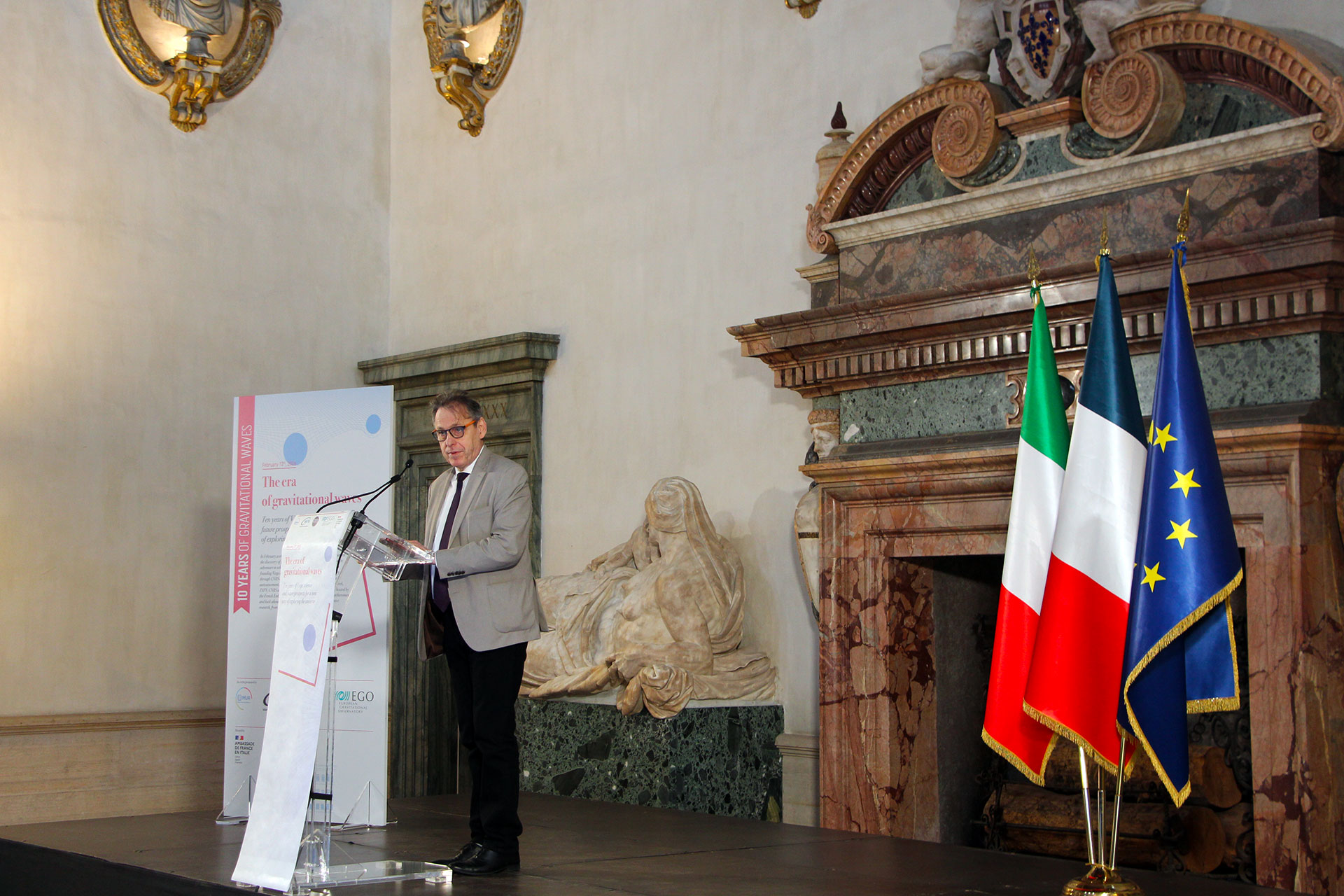
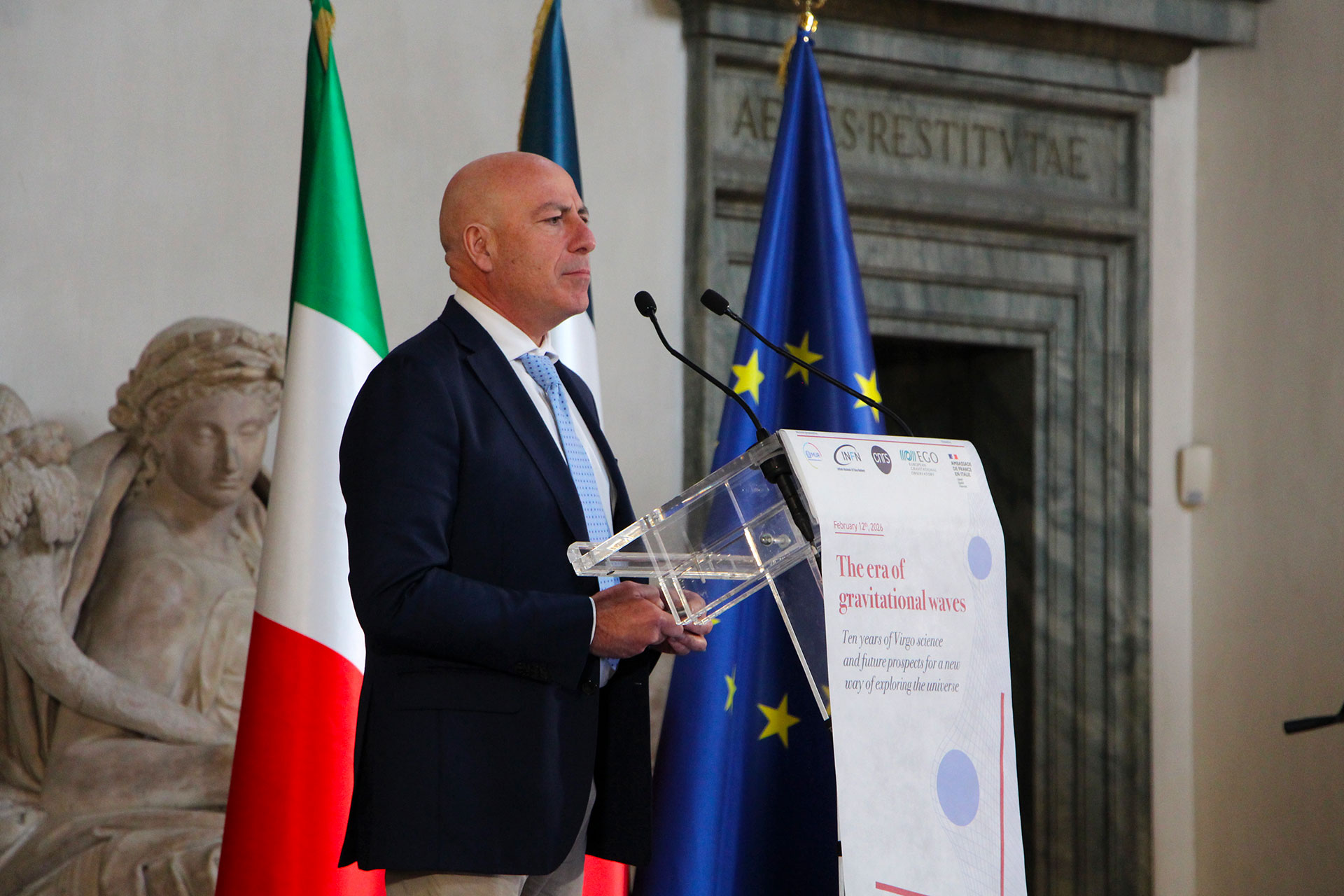
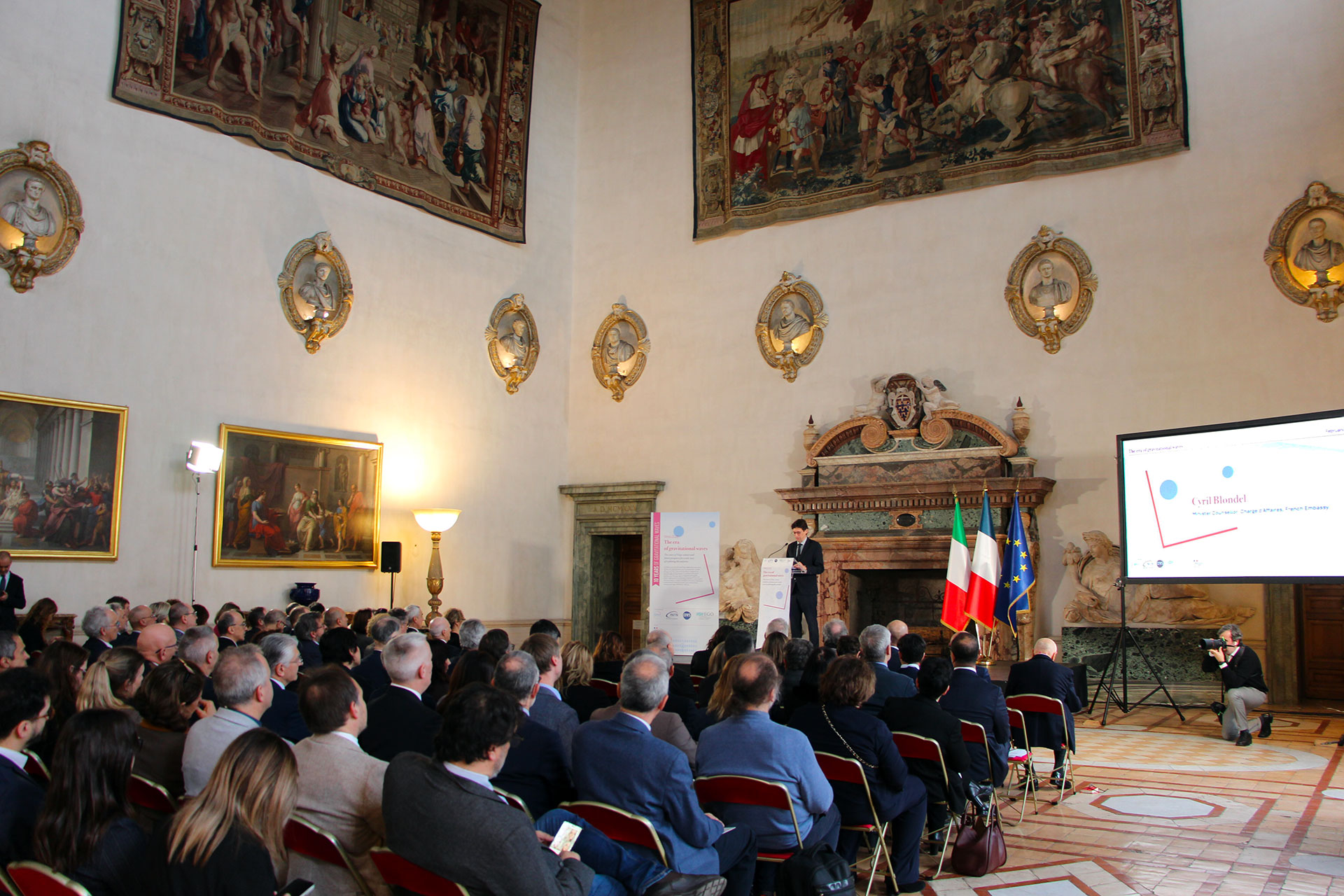
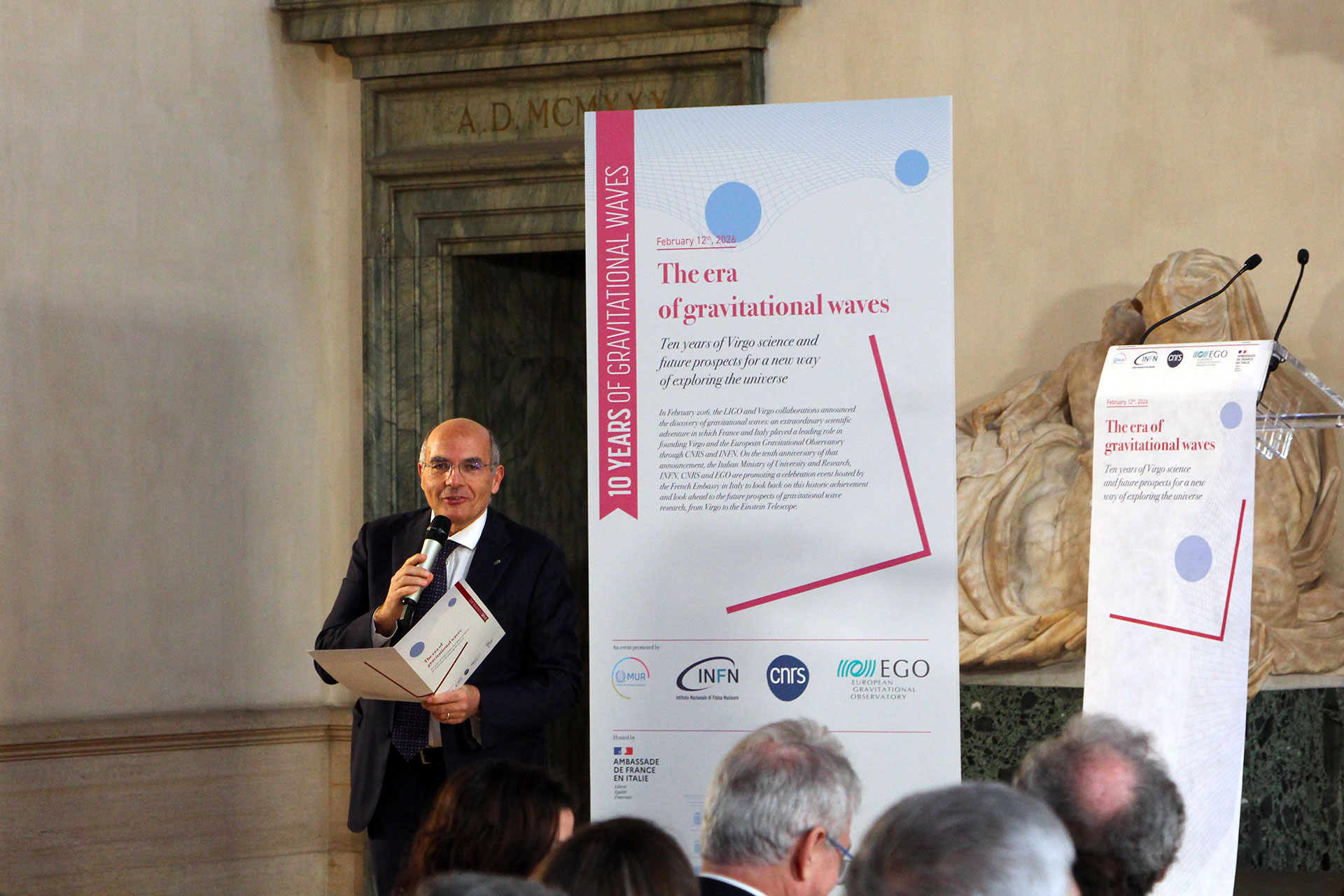
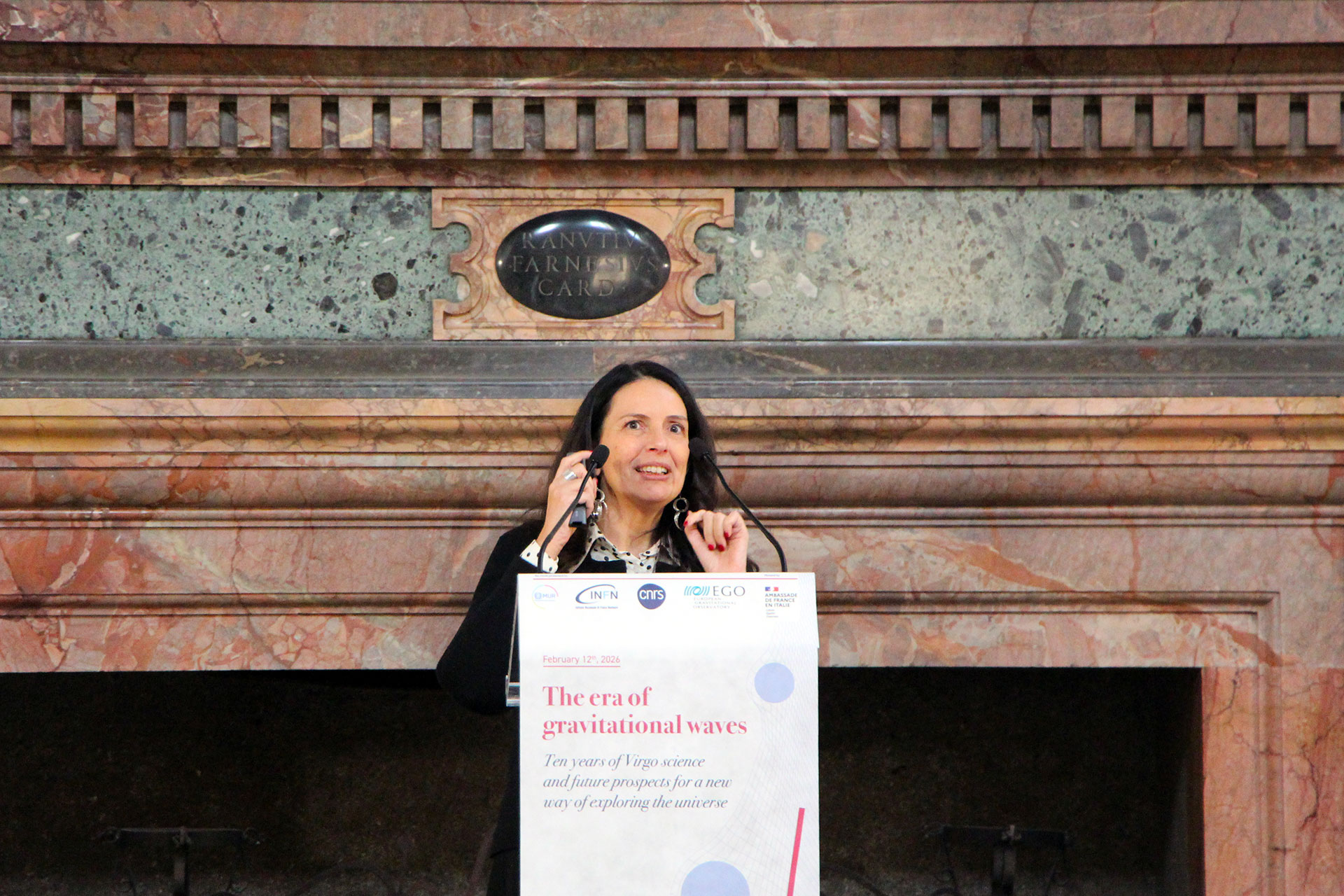
8_Barsuglia
1_Bernini
2_Zoccoli
3_Schuhl
4_Carpinelli
5_Blondel
6_pallavicini
7_Branchesi
You may be interested

Marie Anne Bizouard elected as spokesperson of Virgo: she will be the first woman in this role
Alain Brillet passed away. He was one of the fathers of gravitational wave research
The PAS Rome meeting 2026 at the Polish Embassy in Rome
Inauguration of Palpita: Pedro Torres engages with gravitational waves
The LIGO – Virgo – KAGRA gravitational wave community meeting in Italy again after 15 years


Contacts
Via E. Amaldi,5
56021 Cascina (PI) - Italy
Tel +39 050 752511
Contact us
How to reach us
Stay Tuned
EGO is a consortium of